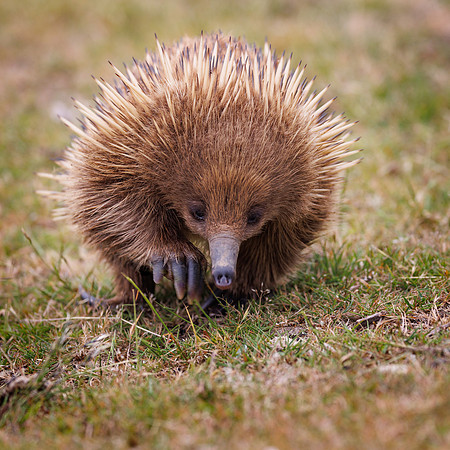
Tachyglossus aculeatus (Short-beaked Echidna) IUCN Status: Least Concern Some species are just difficult to photograph. This could be because they are rare or endangered and therefore under protection or just seen very infrequently. It could be that their distribution is remote or otherwise difficult to get to. Or, it could be that their
behaviour is elusive and difficult to see / photograph.
None of these apply to Short-beaked Echidna. They are quire common, in accessible terrain, and will often just stop when they know people are around. They are easy to see and experience.
However, I think they are actually difficult to photograph well. They are built to keep their head down, focused on the ground in front of them. They are diggers, and often covered in dirt or other debris. But, perhaps the most prohibitive things about getting good photos of echidnas is that they avoid people, either moving away (boring bum photos) or simply balling up with only spike showing.
So, it was with wonder and excitement that I found this echidna at Lake Barrington in Tasmania, and he actively walk towards me. In fact, I had to get up and move away multiple times as he walked closer than my lens could cope, to the point of nearly touching noses as I lay on the ground.
Moments like this are why I love wildlife photography so, so much.