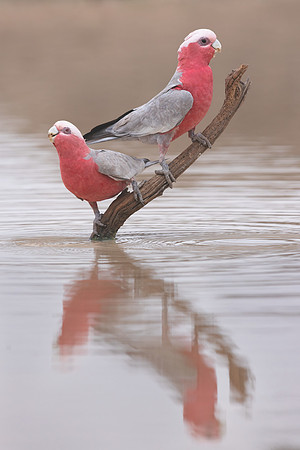
Eolophus roseicapilla (Galah) IUCN Status: Least Concern Having lived all my life in many coastal areas of eastern Australia, the idea that Galahs are largely intruders into those locations is foreign. Yet, like so many “normal” aspects of life in this country, my biases betray me.
Galahs have increased in number and distribution as the forest habitat in coastal areas has been cleared, and agriculture created more water sources. It is also thought that galah’s self-introduced into Tasmania around the 1840’s. One concern about this expansion of territory is that they tend to displace other species such as Major Mitchel Cockatoo.
The difference in eye of the individuals in this photo is indicator of gender. Male galahs have dark brown eyes, and females have red/pink eyes.