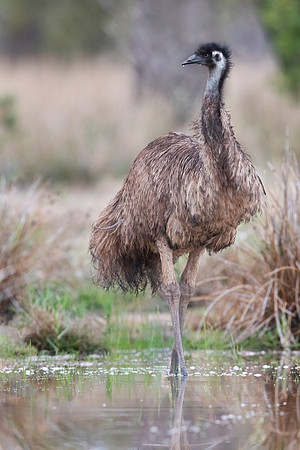
Dromaius novaehollandiae (Emu) IUCN Status: Least Concern Surely Emus are Australia’s most iconic bird, so much so they made it onto our coast of arms. I doubt there’s a wildlife park in Australia that doesn’t include these amazing animals in their menagerie. While they are spread across most of Australia (nix on the Islands where we’ve made them extinct) and relatively common to see when driving in farming areas, seeing them up close in the wild is harder. This animal can run at speeds up to 50km/h and are
flighty, if flightless.
Emu’s have been on the menu since the Aboriginal people arrived in Australia. For a brief stint in the 1990’s
Emu farming was a craze in the US, which saw thousands of free birds roaming Texas when it collapsed. Today they are still farmed for meat, oil and leather.
Here are two ridiculous/nuts Australian trivia involving emus:
- In 1932 the military was called as part of an “Emu War”.This included using machine guns to control numbers as part of a crop protection plan.
- You can go to many restaurants and order the “coat of arms”: pizza, burgers, pies, etc.
Humour aside, we should have farm more responsible farming of natives. I recently saw first-hand the damage cows are doing to a Queensland conservation park. It was grounding to hear cattle and sheep referred to as “invasive herbivores”.