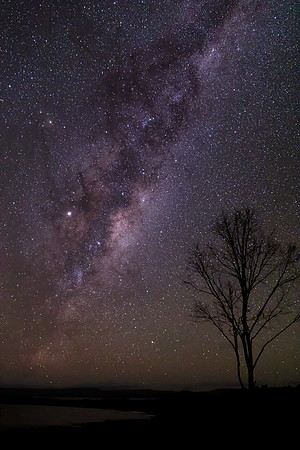
2019-04-05 Milky Way (Great Lake, TAS)
Galactic Core Over Great Lake
I saw the forecast for clear skies on the same night with minimum moon. So after a great night of music, I jumped in the car and headed up into the dark highlands. Arriving a bit later than intended I got straight to shooting.
This style of shooting is a balancing act. First you are trying to expose for as long as possible while not so long as to start to see the rotation of the earth. Next, it requires as wide an aperture as possible, yet most lenses perform much better when not at their maximum aperture. Finally, we want the highest ISO possible without introducing unacceptable grain/noise.
Of course you can relieve some of these tensions with dollars: huge aperture lenses, low noise full frame camera bodies, star trackers…. The list goes on. However “gear” should be the last thing a photographer turns to:
“..amateurs worry about equipment, professionals worry about money, masters worry about light, I just take pictures... “ Vernon Trent.