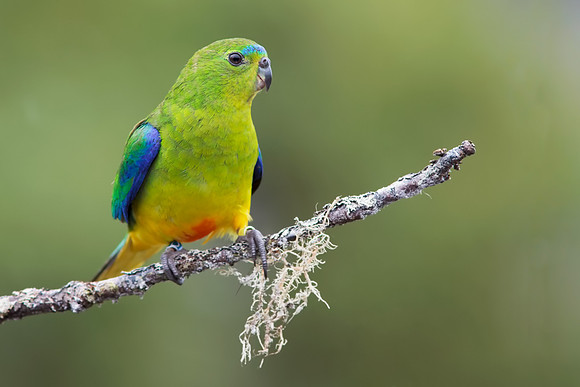
Neophema chrysogaster (Orange Bellied Parrot) ICUN Status: Critically EndangeredWhen I took this photo in 2011 there were about 40 individuals in the wild, and that number was shrinking. It is one of the most critically endangered species in the world. But for releases from the captive breeding program propping up the wild population, they would have been extinct (in the wild) ages ago.
These birds are specialists. They come to the Southwest of Tasmania in summer to breed and rear their young before migrating back to the South of Victoria where they winter in the costal grass and marsh lands. Conservation of these birds has been a very public political football.
The main pressure on them appears to be habitat loss and competition / predation by introduced species. People like to live near the coast, so lots of their habitat has been turned into housing or other “developments”. Further, these parrots often feed on the ground, making them easy prey for cats, which people also like to have around.
Way back in 1996, Jeff Kennett had a spat over a “trumped up corella” stopping at chemical plant development in Victoria. In 2006 Ian Campbell, the federal Environment Minister gave a political master class when he blocked a wind farm project in Victoria on the grounds that it might slice up parrots. There were no records of parrots near the site, and even if they were, the impact of the turbines on the birds was not expected to be high. However, the decision greatly benefited the coal industry, and allowed the Minister to simultaneously portray himself as caring about conservation, and portray the birds as a roadblock to progress.
While there will be no prizes for guessing the then Ministers party (Liberal), perhaps you would be surprised to learn the Greens supported the decision? No? Actually, I guess it does fall within the
seemingly contradictory antics of the “No to Everything Party”.